The Value of Quality: Meaning, Costs, and Alignment
14 Apr, 2026
What does quality truly mean in a modern organization, and why does it continue to evolve while remaining fundamentally the same? Many organizations define quality differently, yet one principle consistently stands out: quality is about meeting customer expectations. Let´s take a closer look at the meaning of quality.
Understanding the meaning of quality
The modern understanding of quality has been strongly shaped by several key people, each contributing a perspective that remains relevant today. The following section describes contributions of a selected few on the meaning of quality, along with a quote about quality. This will give you a better understanding of the meaning.
W. Edwards Deming
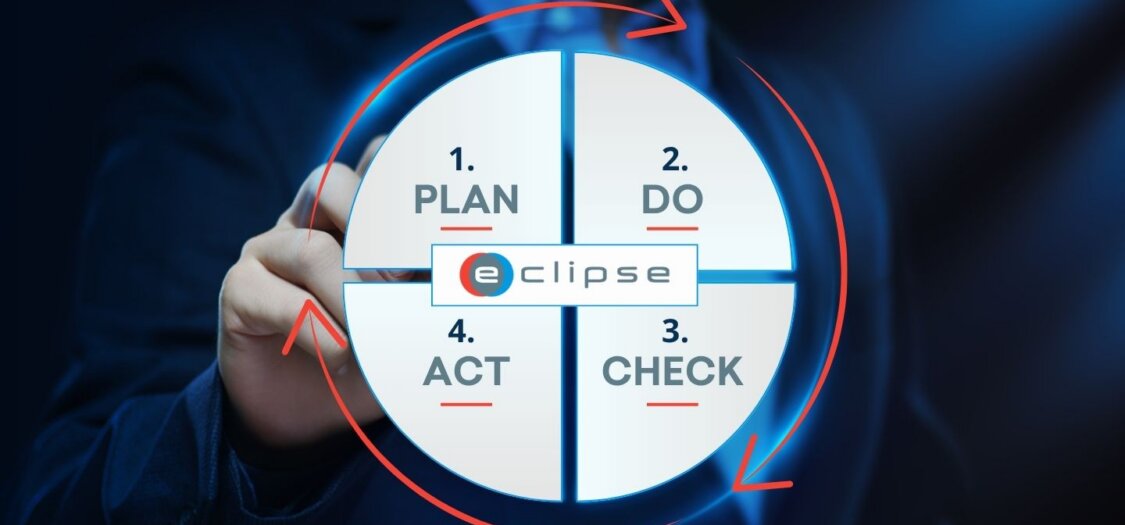
W. Edwards Deming (1900 – 1993) defined quality as the ability to meet customer needs both now and in the future. He emphasized continuous improvement through structured cycles such as Plan, Do, Check, Act (PDCA), and highlighted that quality extends beyond products to include systems, leadership, and organizational culture.
Quality should be aimed at the needs of the consumer, present and future.
– W. Edwards Deming
Joseph Juran
Joseph Juran (1904 -2008) introduced the concept of “fitness for use.” According to this view, a product or service is only considered high quality if it fulfills its intended purpose from the customer’s perspective. Therefore, a product that is free from defects but does not meet the customer’s needs is still not high quality. This reinforced the idea that internal standards alone are not sufficient. In this way, quality means both satisfying the customer (features) and minimizing failures (defects).
Quality means those features of products which meet customer needs and thereby provide customer satisfaction.
– Joseph Juran
Armand Feigenbaum
Armand Feigenbaum (1920 – 2014) expanded the scope further with his concept of Total Quality Control. He emphasized that quality is not the responsibility of a single department, but a company-wide effort involving all employees and functions. In this way, each department contributes to quality in different ways, but quality itself is a shared responsibility across the entire organization. Logistics is responsible for the quality of delivery (timeliness, condition, accuracy), manufacturing is responsible for the quality of the products (specifications, defects, reliability), and sales and marketing is responsible for the quality of selling (clarity, expectations, communication).
Product and service quality can be defined as the total composite product and service characteristics of marketing, engineering, manufacturing, and maintenance through which the product and service in use will meet the expectations of the customer.
– Armand Feigenbaum
Philip Crosby
One of the things Philip Crosby (1926 – 2001) focused on was “conformance to requirements,” in other words, minimizing non-conformances. He argued that quality is achieved when processes consistently meet clearly defined requirements. He also promoted heavily on the principle of doing things right the first time and reducing defects. Since not doing so would always increase costs. He also popularized Total Quality Management (TQM) aiming for error-free work by preventing defects rather than inspecting for them. True quality was therefore free, and the failures (rework, scrap, warranty claims) were the expense.
Quality means conformance to requirements, not elegance.
– Philip Crosby
Kaoru Ishikawa
Kaoru Ishikawa (1915 – 1989) contributed practical tools and reinforced the importance of customer satisfaction as the ultimate goal. His work helped shift quality from a technical discipline to a broader organizational philosophy. He introduced important quality management tools such as
- Cause-and-effect diagram (Ishikawa / fishbone diagram): A structured tool used to identify root causes of problems, typically categorized into areas such as people, processes, materials, and machines.
- The seven basic quality tools: A set of accessible tools designed for use across all levels of an organization
- Cause-and-effect diagram
- Check sheets
- Control charts
- Histograms
- Pareto charts
- Scatter diagrams
- Flowcharts
- Quality circles: Small groups of employees who meet regularly to identify, discuss, and solve work-related problems. This approach actively involves frontline workers and promotes collaboration and continuous improvement.
Quality control starts and ends with training.
– Philip Crosby
Each of these perspectives transformed quality management in the 20th and 21th century. Many systems that are used today to provide us with anything have been influenced. From a production with inspections to a quality management plan that integrates people, processes, and customer expectations.
The true cost of getting quality
What does quality actually cost an organization? The answer is more nuanced than it first appears. To understand this fully, it is useful to distinguish between the cost of achieving quality and the cost of failing to achieve it.
The cost of achieving quality, often referred to as prevention and appraisal costs, includes all efforts made to ensure that products and processes meet requirements from the start. These costs are planned, visible, and typically controlled. These efforts aim to reduce the likelihood of defects before they occur.
Prevention costs
These are costs incurred to avoid defects or quality issues before they occur. The goal is to build quality into processes from the start. Prevention costs include:
- Process design: Creating efficient, error-resistant processes that minimize the chance of defects.
- Employee training: Educating staff to perform tasks correctly and follow quality standards.
- Workflow standardization: Establishing consistent procedures to reduce variation and mistakes.
- Planning: Developing quality plans, setting standards, and anticipating potential problems in advance.
Money spent to prevent problems.
Appraisal costs
These are costs incurred to avoid defects or quality issues before they occur. The goal is to build quality into processes from the start. Prevention costs include:
- Inspections: Examining products or processes to detect defects.
- Audits: Systematic reviews of processes or systems to ensure compliance with standards.
- Testing: Verifying that products function correctly and meet specifications.
- Reviews: Assessing work (e.g., documents, designs, performance) to identify errors or improvements.
Investments in prevention and appraisal costs improve processes. As emphasized by Juran and Deming, improving processes reduces variation and leads to more predictable and efficient outcomes (Juran, 1999; Deming, 1986).
The cost of poor quality
The cost of poor quality, also known as the cost of failures, represents the consequences of failing to meet requirements or customer expectations. Philip Crosby highlighted that these costs are often far greater than the cost of achieving quality (Crosby, 1979). There are two costs of failures.
Internal failure costs
These occur before the product or service reaches the customer. They result from defects found during internal processes. Internal Failure costs include:
- Rework: Fixing defective products or correcting errors.
- Scrap: Discarding unusable products or materials.
- Inefficiencies: Wasted time, effort, or resources due to poor quality.
- Delays: Production or delivery slowdowns caused by correcting issues.
External failure costs
These occur after the product or service has reached the customer. They are usually more serious because they affect customer satisfaction and brand reputation. These costs are often less visible but have a direct impact on long-term business performance. External failure costs include:
- Customer complaints: Handling dissatisfaction and resolving issues.
- Warranty claims: Repairing or replacing defective products.
- Penalties: Fines or contractual penalties due to non-compliance.
- Loss of reputation: Damage to brand image, leading to lost customers and revenue.
How quality is managed
Quality management begins with intent. This intent is defined by leadership and reflects the organization’s commitment to meeting customer expectations. However, implementing this intent requires alignment across all departments.
A fragmented or underdeveloped quality management approach from leadership significantly increases risks of poor quality. Without proper frameworks, tools, and strategies, organizations struggle to maintain consistency, traceability, and alignment across departments and supply chains.
Departments and quality management
Each department typically has its own quality goals. Engineering may focus on technical accuracy, operations on efficiency, procurement on supplier reliability, and administration on compliance. While these goals differ, they must align with the overall organizational vision of quality. Ask yourself, is every layer of your organization aware they need to increase quality for your customer?
It must be stated that collaboration on quality is an important key. Organizations that establish integrated processes and shared visibility are better positioned to maintain consistent quality across all activities. Members will automatically want to meet the shared goals in order to not become the weakest link for meeting the quality goals.
Suppliers and quality management
Quality extends beyond internal operations. Every organization operates within a network where it is both a supplier to its customers and a customer to its suppliers.
Suppliers expect clear expectations, reasonable timelines, efficient processes, and support. When these expectations are not met, the impact is felt across the entire value chain.
To create an effective quality management program, organizations must integrate external perspectives with internal perspectives. In other words, your suppliers must be enabled to set quality goals that match your quality goals.
Among other things, enabling them to work in the same quality management system and with the same vision as your organization supports this tremendously.
Invest in ECLIPSE to avoid much higher costs of poor quality
Quality is not owned by one department. It starts with goals, is shaped by every team, and extends across suppliers and customers. When these elements are not aligned, organizations face inefficiencies, delays, and hidden costs.
This is where an integrated solution such as the ECLIPSE Software Suite makes the difference. By connecting processes, teams, and data in one environment, it ensures alignment across your organization and even with your external partners.
Want to see how this works in practice? Discover ECLIPSE Software Suite and see how you can strengthen quality across your organization. Contact us for a free demonstration today!